
Strategy
Define the conversion • choose one step or several • match mode to behavior • design safe urgency
Use these planning frameworks to define the outcome, participant value, verification, reward, deadline, sponsor role, budget, and reporting story.
Each resource should help a partner make a better decision before launch.
Define the conversion • choose one step or several • match mode to behavior • design safe urgency
Understand CPJ • cap maximum exposure • separate reach from completion • compare acquisition economics
Build cross-business journeys • structure sponsor value • create city and community campaigns
Use XP and badges well • create streaks • design collections • build meaningful unlocks
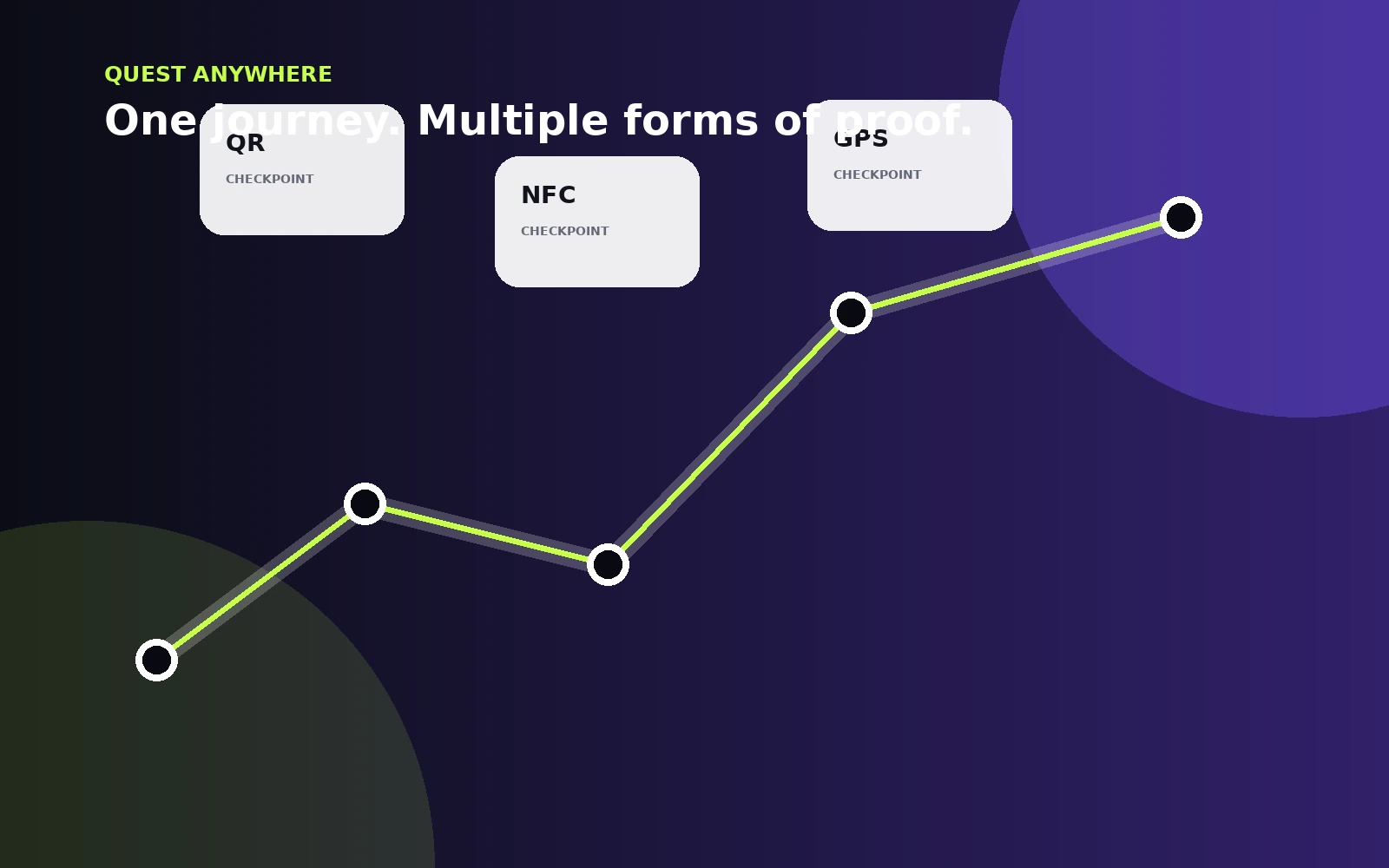
Choose QR, NFC, GPS, attendance, transaction, or mixed proof • define eligibility and limits
Build a funnel • define the finished journey • separate rewards from full completions • publish honest impact
The Kinago Quest Planning Canvas organizes the questions that matter without forcing the client to design the technical system.
What should exist when the participant completes the journey?
Who is the experience for, and what makes it desirable?
What is the shortest credible path to the result?
What funded value and Kinago progression fit the effort?
What proves the approved steps occurred?
What budget, limits, timeframe, processing, and CPJ structure apply?
Resources should help organizations clarify the goal. Kinago handles the technical configuration and campaign mechanics.
The first planning form takes about three minutes. Detailed design happens with Kinago.
Tell us the outcome, audience, location, timeframe, budget, and reward idea. Kinago will map the journey.